
There’s something utterly magical about that bright, velvety spread that lifts any snack or dessert – my Homemade Lemon Curd Recipe is just that kind of kitchen treasure. It’s tangy, creamy, and so simple to make that you’ll find yourself reaching for lemons way more often!

Jump to:
Why You'll Love This Recipe
I adore this Homemade Lemon Curd Recipe because it captures that perfect balance of tart and rich in every silky spoonful. Making it yourself means fresh, natural flavors and no weird preservatives—totally worth the little hands-on time.
- Supple & Smooth Texture: The curd comes out perfectly creamy and luscious every time, thanks to simple stirring and the addition of cold butter at the end.
- Bright, Authentic Lemon Flavor: No artificial tangs here—just pure lemon juice and zest that pack a fresh citrus punch.
- Quick & Easy: From start to finish, it takes just about 20 minutes, making it an achievable treat any day of the week.
- Versatile & Delicious: Whether spread on toast, dolloped on pie, or swirled into yogurt, this curd adds sunshine to your bites.
Ingredients & Why They Work
Each ingredient plays a key part in making this Homemade Lemon Curd Recipe sing. Balancing tart lemon juice with creamy butter and eggs creates that classic smooth custard feel, while sugar tones down the acidity just enough.

- Sugar: Sweetens the curd and helps stabilize the texture as it cooks gently.
- Large Egg & Egg Yolks: They’re the thickening agents here, giving the curd its custardy richness without overpowering the lemon flavor.
- Lemon Juice: The heart of the recipe, freshly squeezed juice provides authentic brightness that bottled juice can’t match.
- Lemon Zest: Adds an aromatic citrus note that amplifies the fresh lemon taste beautifully.
- Sea Salt: Just a pinch enhances all the flavors and cuts through the sweetness for balance.
- Butter (cold and cubed): Stirred in off heat, it melts and enriches the curd with a silky finish.
Make It Your Way
One of the things I love about this Homemade Lemon Curd Recipe is how easy it is to tailor to your taste buds. Feel free to tweak the sweetness or try adding a splash of vanilla for a twist—trust me, you’ll find your favorite version in no time.
- Variation: I sometimes swap out half the lemon juice with blood orange juice for a gorgeous color and sweeter citrus flavor—it’s a fun twist that my family adores.
Step-by-Step: How I Make Homemade Lemon Curd Recipe

Step 1: Whisk It All Together Gently
Start by combining sugar, the whole egg, yolks, lemon juice, zest, and salt in a medium saucepan. Whisk everything thoroughly until you have a smooth mixture without any egg lumps. I find using a ceramic-coated pan or non-metal saucepan really helps avoid any metallic taste—felt the difference the first time I tried it!
Step 2: Cook the Curd Slowly While Stirring
Place your pan over medium-low heat. Stir the mixture frequently, scraping the bottom so nothing sticks or burns. You’ll want to keep an eye out for the curd thickening and starting to bubble gently; that’s your cue that it’s nearly done. Patience here really pays off—low and slow is the best way to get that perfect texture.
Step 3: Off the Heat, But Don’t Walk Away
Once thickened, immediately take the pan off the heat and pour (or strain if you spot any lumps) into a heat-safe, non-metal container. Then, add your cold cubed butter right away. Stir or whisk until all the butter melts into the curd, creating a glossy, smooth finish that’s simply irresistible.
Step 4: Chill and Prevent Skin Formation
Press a piece of parchment paper or cling wrap directly onto the surface of the curd before refrigerating. This keeps a skin from forming and locks in freshness. Chill it for 1 to 2 hours, and it will thicken up nicely—when I snack on it straight from the fridge, I swear it tastes better with every bite.
Top Tip
After making this lemon curd many times, these tips helped me get consistently smooth, vibrant results that never disappoint. They might save you some trial and error.
- Use Fresh Lemons: Freshly squeezed lemon juice and zest make the biggest flavor difference—bottled juice just can’t compare.
- Cook on Medium-Low Heat: Rushing the curd by turning up the heat can cause eggs to scramble or curd to burn, so keep it low and stir frequently.
- Butter Last & Cold: Adding cold butter off the heat gives the curd a velvety texture and gloss you just can’t achieve otherwise.
- Cover the Surface: Wrapping the curd right on top while cooling prevents an annoying skin from forming, so don’t skip this step!
How to Serve Homemade Lemon Curd Recipe

Garnishes
I’m a simple gal when it comes to garnishing lemon curd—sometimes just a sprig of fresh mint or a few edible flowers to brighten things up. The tartness shines best when it’s not too busy on top!
Side Dishes
Pair it with buttery scones, warm toast, or dollop over thick Greek yogurt. It’s also outstanding alongside berry tarts or spooned onto pancakes—trust me, you’ll want to dip everything.
Creative Ways to Present
For special occasions, I love to use lemon curd as a layer in cakes or as a filling inside homemade macarons. It adds a pop of color and flavor that makes desserts feel extra fancy without fuss.
Make Ahead and Storage
Storing Leftovers
Store your lemon curd in a clean, airtight jar in the fridge. It keeps beautifully for up to 2 weeks. Just scoop with a clean spoon each time to prevent contamination.
Freezing
I’ve frozen lemon curd successfully by placing it in a freezer-safe container. Thaw it overnight in the fridge, then whisk well before using to bring back that silky texture—perfect for making ahead of big events.
Reheating
If you want it warm, gently reheat in a double boiler or microwave in short bursts, stirring often. Avoid boiling to keep the curd smooth and luscious.
Frequently Asked Questions:
Lemon curd can curdle if it cooks at too high a temperature or if you don’t stir frequently. To prevent this, cook on medium-low heat and whisk consistently to keep the eggs from scrambling. Patience and gentle heat are your best friends here.
While bottled lemon juice can be used in a pinch, I highly recommend fresh lemons for the best flavor and brightness. Bottled juice often lacks the natural oils and freshness that fresh juice and zest add, which are essential for that vibrant lemon curd taste.
Stored in an airtight container, homemade lemon curd will keep in the refrigerator for up to 2 weeks. Always use a clean spoon to avoid contamination and watch for any signs of spoilage like off smells or mold.
Absolutely! This lemon curd is excellent as a filling for cakes and tarts because of its smooth texture and bright flavor. Just make sure your cake layers are cooled before spreading, and refrigerate the assembled cake to keep everything fresh.
Final Thoughts
This Homemade Lemon Curd Recipe holds a special place in my kitchen because it’s a straightforward way to add a burst of sunshine to everyday moments. Once you make it from scratch, you’ll see how much better fresh really tastes compared to store-bought versions. Promise me you’ll give it a try soon — it’s fun, dependable, and oh so delicious!
Print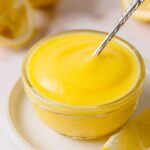
Homemade Lemon Curd Recipe
- Prep Time: 10 minutes
- Cook Time: 10 minutes
- Total Time: 20 minutes
- Yield: 1.5 cups
- Category: Condiment
- Method: Stovetop
- Cuisine: British
- Diet: Vegetarian
Description
This classic Lemon Curd recipe is a tangy, creamy spread bursting with bright citrus flavor. Made with sugar, eggs, fresh lemon juice and zest, sea salt, and cold butter, it creates a perfectly smooth and thick curd. The richness from the butter and eggs balances the acidity from the lemon, making it ideal as a spread for scones, a filling for cakes, tarts, pies, or simply enjoyed on its own. Easy to prepare in just 20 minutes, this homemade lemon curd is far superior to store-bought versions.
Ingredients
Primary Ingredients
- ⅔ cup sugar
- 1 large egg
- 2 large egg yolks
- ⅓ cup lemon juice (from about 2 lemons)
- 1 lemon zested
- ⅛ teaspoon sea salt
- ⅓ cup butter (cold and cubed)
Instructions
- Combine Ingredients: In a medium saucepan, whisk together sugar, whole egg, egg yolks, lemon juice, lemon zest, and sea salt until the mixture is smooth and no egg pieces remain. Using a non-metal saucepan like ceramic coated is recommended to avoid any metallic taste.
- Cook the Curd: Place the saucepan over medium-low heat. Stir frequently to prevent the mixture from burning on the bottom. Continue cooking until the curd thickens and begins to bubble, indicating it is cooked through.
- Add Butter and Mix: Remove the curd from heat and immediately transfer it to a heat-safe non-metal container or strain it if lumpy. Add the cold cubed butter and stir or whisk until fully melted and the mixture is smooth and creamy.
- Chill: Cover the surface of the curd with parchment paper or plastic wrap directly to prevent a skin from forming. Refrigerate for about 1 to 2 hours until chilled and further thickened. The curd is now ready to use.
Notes
- This lemon curd recipe makes about 1 ½ cups (26 tablespoons) of curd, perfect for multiple uses like spreading or baking.
- Using fresh lemon juice and zest provides vibrant citrus flavor far superior to store-bought lemon curd.
- Cooking over medium-low heat while stirring constantly helps prevent curdling or burning.
- Cold butter added off the heat enriches the curd and creates a smooth texture.
- Covering the curd’s surface while cooling prevents skin formation for a perfect consistency.
- Use a non-metal saucepan, such as ceramic coated, to avoid imparting any metallic taste to the curd.
- Store the lemon curd refrigerated and consume within one week for optimal freshness.
Nutrition
- Serving Size: 1 tablespoon
- Calories: 48 kcal
- Sugar: 5 g
- Sodium: 33 mg
- Fat: 3 g
- Saturated Fat: 2 g
- Unsaturated Fat: 1.2 g
- Trans Fat: 0.1 g
- Carbohydrates: 5 g
- Fiber: 0.01 g
- Protein: 0.5 g
- Cholesterol: 28 mg


Leave a Reply